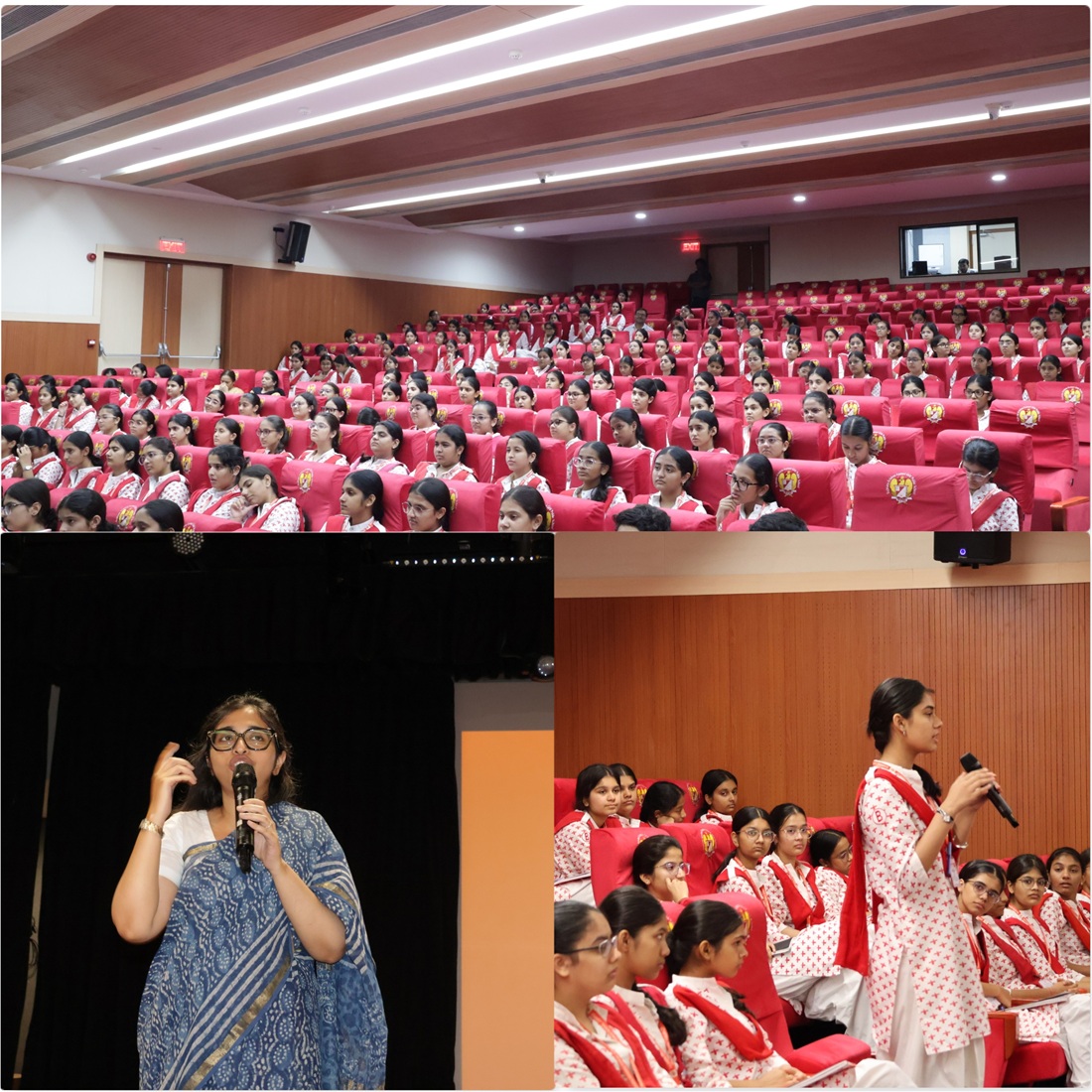
Session on Artificial Intelligence and Journalism: The Future of Media and Storytelling.
A session on AI and Journalism: The Future of Media and Storytelling was organised at Rajmata Krishna Kumari Girls’ Public School, Jodhpur on 23 July, 2026. The session began with a warm welcome of the distinguished guest speaker, Prof. Sarah Zia, Associate Professor at the Jindal School of Journalism and Communication, O.P. Jindal Global University. Prof Sarah Zia is a renowned journalist, researcher, and educator, who shared her insights on the evolving relationship between media, technology, and journalism. She explained how artificial intelligence is reshaping the future of news, communication, and storytelling.
Prof Zia highlighted on how technology is changing the way news is gathered, verified, and presented. She discussed the importance of interactive journalism and data journalism in creating impactful stories. She also spoke about how artificial intelligence is supporting storytelling by analysing vast amounts of data, creating engaging content and personalise stories for different audiences.
Through an engaging presentation, Prof. Zia explained both the benefits and the misuse of artificial intelligence. She explained how it strengthens journalism while also posing challenges such as misinformation, deepfakes, and violations of personality rights. Using real-life examples, she showed how AI can generate a person’s images, videos, and voices without their permission, which are sometimes misused. She guided students on the importance of using technology responsibly to maintain credibility, accuracy and ethical standards that are essential for success in any career. She also explained how AI-powered tools can help in verifying facts and check the accuracy of information more efficiently. Students were also guided about the various courses and specializations that can help them build successful careers in journalism and related fields.
The masterclass concluded with an interactive question-and-answer session, where students participated enthusiastically and engaged in meaningful discussions with the speaker. They raised thought-provoking questions on topics such as the role of copyright laws in AI-generated content and the emerging career opportunities at the intersection of artificial intelligence, law and media. Prof. Zia responded to their queries with practical insights, motivating students to explore these evolving fields with curiosity and responsibility.
The key takeaways from the session are as follows:
The session highlighted on how artificial intelligence is making information gathering, analysis, and fact-checking faster and more efficient. Students were told that, no matter how advanced technology becomes, credibility, accuracy, and ethical values will always remain the foundation of responsible journalism. They were encouraged to develop digital literacy, critical thinking, and ethical awareness to prepare for the rapidly evolving and the emerging career opportunities. The session was highly engaging and insightful which aimed at motivating students to embrace technology responsibly and become informed, ethical, and future-ready citizens.